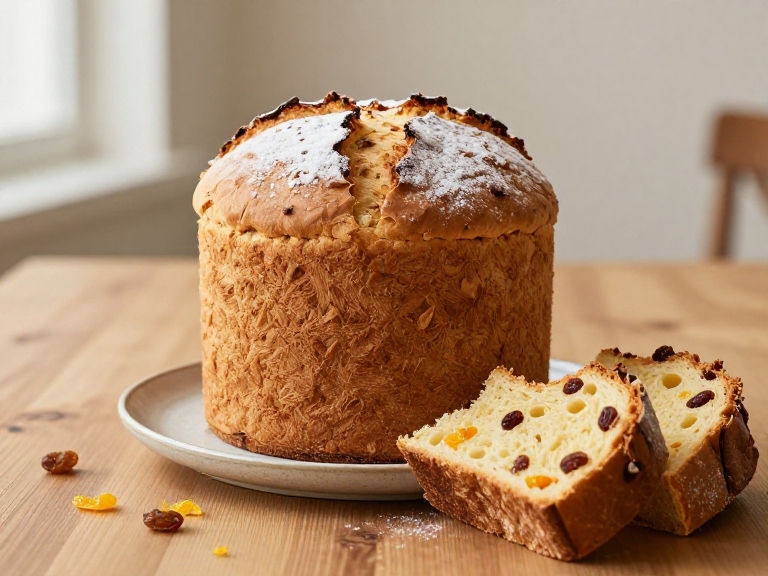
Panettone Recipe is one of the most popular Italian sweet breads, popular during the holidays, particularly Christmas. Traditional panettone has a tall, airy texture, buttery flavor, fragrant citrus notes, raisins and candied fruits, making it a special, elegant and comforting treat.
It takes a while to make a real panettone, but it’s worthwhile. The secret is to be patient, carefully ferment the dough, use good ingredients and be gentle with it. This step-by-step recipe demonstrates how to create a simple and yummy traditional Italian panettone recipe at home.
What Is Panettone?
Panettone is a sweet and enriched Italian bread that was created in Milan. It is made differently to a regular cake, using yeast and a fermenting dough. This results in the bread having the light, soft and slightly chewy crumb texture that is typical of this type of loaf.
Raisins and candied orange/carrot peel are typical ingredients of a traditional Panettone Recipe. These days, they may feature chocolate, nuts, dried fruit or even other flavors, but the traditional duo is still a popular choice.
Traditional Panettone Ingredients
Making homemade Panettone requires:
- 500g of mid-strength bread flour
- 100 grams granulated sugar
- 180 ml warm milk
- 1/4 cup of oat flour
- 3 large eggs
- 2 egg yolks
- 120 g of unsalted butter, softened
- 1 teaspoon vanilla extract
- 1 tablespoon honey
- 1 teaspoon salt
- 150 grams raisins
- This is the candied orange peel to use as 100 grams.
- 50g of candied lemon peel
- Zest of 1 orange
- Zest of 1 lemon
A small amount of melted butter can also be used to finish.
Prepare the Fruit
First make the raisins and candied fruit. In a bowl place the raisins and cover with warm water. Allow them to soak for about 15-20 minutes. This will aid in softening the raisins and prevent them becoming dry in the baking.
Rinse the raisins sufficiently, remove water with the damp kitchen towel. Mix with candied orange and lemon peel. While working with the dough, set the fruit aside.
Activate the Yeast
Place warm milk in a small bowl. The milk should be warm, but not hot. Stir in the yeast and some of the sugar. Mix lightly and let stand about 5-10 minutes.
If the layer of foam is light, then the yeast is active. The yeast might be old, or the liquid might have been too hot or too cold if no activity is observed.
Make the Panettone Dough
Combine bread flour, sugar (if any) and salt in a large mixing bowl. Stir dry ingredients.
Add the eggs, egg yolk, honey, vanilla extract and yeast mixture. Start adding the ingredients and begin mixing together into a sticky dough.
Panettone dough is soft and sticky by nature, so don’t add too much flour. The dough can be hand kneaded or a stand mixer equipped with a dough hook can make this easier.
Add the Butter Gradually
Butter is one of the key elements in the recipe for Panettone Recipe, and the way it’s added is crucial. Add the softened butter little by little, as you knead the dough.
When adding butter, wait until the last ingredient has absorbed before adding any further butter. Knead until the dough is smooth, elastic and shiny.
The dough should be soft, but not too soft, when properly developed. Good panettone has a light and airy texture, which is achieved with this gluten development.
Mix in Citrus Zest and Fruit
When the dough develops, then add the orange zest and lemon zest. Gently mix them into the dough.
Then make additions of prepared raisins and candied fruit. Mix just until the fruit is evenly distributed. Do not over-mix otherwise it may cause over-weak dough and rupture the fruit.
First Rise
Place dough into a lightly oiled bowl. Cover with plastic wrap or a clean kitchen towel.
Set aside basket in warm, draft-free location and let dough rise until it has doubled in size. This will take approximately 1½ to 3 hours depending on the level of yeast activity and room temperature.
Take your time in this step. The right fermentation plays an important role in the flavour and texture of panettone.
Shape the Panettone
After the dough has risen, carefully turn it out of the bowl, and onto a lightly oiled surface. Do not do a hard punch down on the dough.
Form the dough into a round shape. Make the surface tension by gently pulling the dough towards the bottom while shaping.
Use a panettone mould to shape the dough. The mould (or form) should be large enough to let the dough rise considerably in the second rising.
Second Rise
Cover and re-let Panettone Recipe rise again in warm spot.
The second rise can take anywhere from about 1½ – 3 hours. The dough should be about to overflow the mold, but should not overflow.
This is a very critical step, as a loaf that is not proofed long enough may become dense, and one that is too long may collapse in the oven.
Prepare for Baking
Preheat the oven to about 180C (350F).
Just before putting the panettone into the oven, carefully cut a shallow cross with a sharp knife in the top. If using, put a small amount of butter in the middle of the cross.
Take care not to lose the fermentation air when handling the dough.
Bake the Panettone
Bake until the Panettone Recipe is just beginning to turn golden brown, about 35-45 minutes in the preheated oven, depending on the oven and size of the panettone.
The top should become beautifully golden brown. Loosely cover with aluminum foil for the end of baking if the surface starts to brown too quickly.
Panettone should be completely baked before taking out of the oven. If you have a kitchen thermometer, the temperature inside should be in the range of 90-94°C (194-201°F).
Cool the Panettone Upside Down
One of the special steps involved in panettone making is cooling. The bread is very light and crumbly and may sink when it is cooling.
Carefully slide long skewers through the lower part of the panettone and hang upside down between two sturdy surfaces. Wait until it is cold before serving.
This aids to maintain its lofty figure and frail inside.
Serve and Enjoy
When the panettone has cooled down, take out the skewers and using a serrated knife cut the panettone into slices.
Traditional panettone is great by itself, but can be served with butter, mascarpone, whipped cream or a cup of coffee or tea. A slight warmth will accentuate the buttery aroma and citrus taste even more.
There are some tips for a light and fluffy Panettone
Use strong wheat flour, such as bread flour, since it will have sufficient gluten in order to support the enriched dough. Be sure your butter is soft, and work it in slowly while kneading.
Don’t add too much flour because it is sticky. Panettone dough should be soft and elastic.
Temperature also matters. Giving the yeast good fermentation conditions is important and too much heat can kill the yeast or melt the butter into the dough.
Last but not least, allow the dough to rise. Panettone is not a quick bread, and a hasty manner in the fermentation process may lead to a heavy texture.
How to Store Homemade Panettone
Once completely cooled, store panettone in an airtight bag or container at room temperature. It’s best eaten within a few days when it’s fresh and fragrant.
If you wish to store it for a longer period, wrap it properly to prevent air and water loss. Gently warmed slices may also be used to bring some softness back to the bread.
Final Thoughts
Traditional Panettone Recipe-making calls for patience, but it’s all worthwhile! Every step, from preparing the fruit to developing the enriched dough, is carefully executed to bring out the unique flavor of the finished bread.Each step, from the preparation of the fruit to the careful proofing, baking and cooling of the bread, is carefully executed to bring out the unique flavor of the finished bread.
Using high quality ingredients and proper fermentation techniques, you can easily make your own tall, tender, buttery, fragrant and fruity panettone laced with mouth-watering citrus and raisins. The perfect centerpiece for a festive table, and a great homemade treat for family and friends!