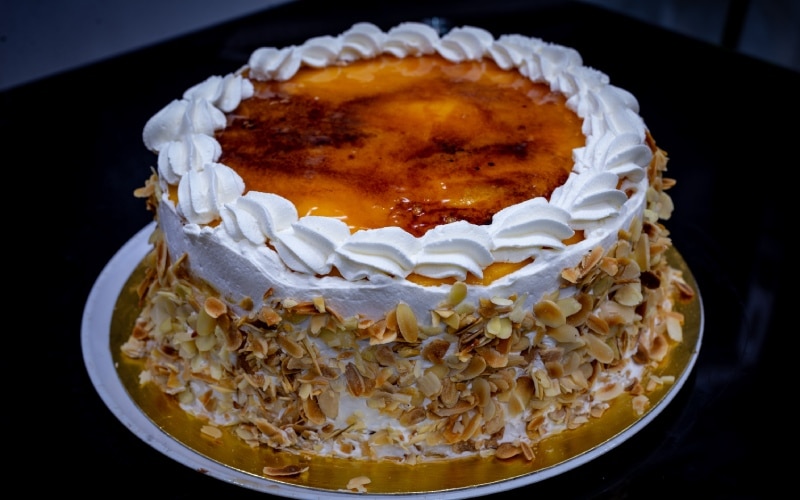
Tarta San Marcos is a traditional Spanish cake, characterized by its elegant layers, creamy texture, and beautifully caramelized topping. If you’re looking for a birthday dessert, family gathering, special occasion or celebration, then this is the dessert for you, traditionally associated with the city of León, in Spain. This is a light sponge cake, cream and a sweet topping on toast, it’s pretty and tasty!
Tarta San Marcos is not a cake that is overly decorated such as most modern cakes, but it is a cake that is created from simple ingredients and carefully prepared and layered. Typically the sponge cake, whipped cream, pastry cream, syrup and a thin topping of caramelized sugar. There may also be some variations in other ingredients used, such as chocolate, nuts or fillings, depending on the baker and the region.
What Is Tarta San Marcos?
Tarta San Marcos is a traditional Spanish sponge cake cake that is normally made up of several layers. A soft sponge is used as the base and sweet syrup to help keep the cake moist. A rich and smooth contrast is provided by the light sponge and layers of whipped cream and pastry cream.
The classic part of the dessert is frequently the golden caramelized surface. Sugar is applied to the top layer and lightly toasted until the sugar becomes crisp and crunchy. It gives the filling a nice creamy texture and a richness of sweetness, while also providing a slightly crispy outer layer.
Typically, the cake is not overly decorated, but rather has a simple and elegant look. This translates to a dessert that is more about the taste, texture and traditional methods than the fancy presentation.
Where Did Tarta San Marcos Originate?
Tarta San Marcos is closely linked to the city of León in the Northwest of Spain. The name of the cake comes from San Marcos, also known as Saint Mark, and is associated with the cuisine of the region.
The popularity of Tarta San Marcos spread throughout Spain over time and it evolved into a familiar celebration cake. Local bakeries and pastry chefs have made their own, some have variations in the sponge, cream, and decoration… as well as the filling.
The basic structure of the cake is always the same – light sponge, creamy layers, syrup moisture and a characteristic caramelized top.
What Are the Main Ingredients in Tarta San Marcos?
Traditional Tarta San Marcos consists of the following, although it may change depending on the variations:
1. Sponge Cake
The structure of the dessert comes from a light sponge cake. Made with eggs, sugar, flour and sometimes flavoring, to make a soft and airy texture.
2. Whipped Cream
Creamy whipped cream is used for its lightness and richness. This is frequently used between the layers of sponges and may be used around the edges of a cake.
3. Pastry Cream
The pastry cream provides a smooth creamy filling to the cake. Typically consists of milk, egg yolk, sugar and thickening agent like cornstarch.
4. Sugar Syrup
Sponge is sometimes brushed with or dipped in a light syrup. This will help retain moisture in the cake and provide sweetness without heaviness.
5. Sugar for Caramelization
The sugar on the top is gently caramelised to give the characteristic golden-brown crust. This is one of the most iconic features of Tarta San Marcos.
How Is Tarta San Marcos Made?
Tarta San Marcos is made up of multiple steps, but it’s not too complicated if you make each part separately.
Firstly, the sponge cake is baked until light, soft and evenly cooked. After cooling it is cut into layers horizontally.
Next, a simple sugar syrup is made. The syrup can include water, sugar and a flavoring like vanilla or citrus. The syrup is brushed on the layers of sponges to moisten them.
Then, the whipped cream and pastry cream are made. Assemble with the desired filling to give a soft cake and creamy texture to the sponge layers.
Finally, a thin layer of sugar is sprinkled on top of the cake. Once the sugar is caramelized using a suitable kitchen torch or other controlled heating source, it is golden, and a little crisp.
Once the cake has cooled, it can be garnished with whipped cream, chocolate, nuts and other traditional elements.
What Does Tarta San Marcos Taste Like?
The sweetness, creaminess and cake flavor balance out in Tarta San Marcos. The sponge itself is light and mild, so that the fillings really stand out.
The whipped cream enhances the creaminess, and the pastry cream adds more of a custard flavor. The syrup is used to moisten and sweeten the sponge. The topping of the caramelized sugar adds a gently toasted taste and some depth to the texture.
This will make a rich cake, but not as dense as certain butter cream cakes.
What Makes Tarta San Marcos Different From Other Cakes?
A standout aspect of Tarta San Marcos is its soft layer and caramel top, which makes it one of the best-looking choices available. While frosting or icing may be the cake’s most prominent layer in many traditional cakes, a thin and crisp sugar crust may be used for the Tarta San Marcos.
It is also characterized by its layered structure. Traditional versions may use multiple textures, usually a sponge, whipped cream, and pastry cream, as opposed to a single texture.
The cake is also a symbol of the Spanish pastry culture. It is its simplicity of well-done basic ingredients which makes it so appealing rather than complicated modern techniques or fussy decoration.
What Are the Different Types of Tarta San Marcos?
Depending on the recipe and bakery, there are several versions of Tarta San Marcos.
Traditional Tarta San Marcos: The classic one typically consists of sponge cake, syrup, pastry cream, whipped cream and caramelized sugar.
Chocolate Tarta San Marcos: Some newer ones have chocolate sponge and/or a chocolate cream or chocolate flavored filling. This variation is particularly popular amongst chocolate lovers.
Fruit Tarta San Marcos: Some versions include fresh or preserved fruit to add some acidity and freshness to the rich cream.
Nut-Topped Tarta San Marcos: Almonds, hazelnuts, or any other nut can be used as a garnish or for additional texture in filling.
Why is Tarta San Marcos so popular?
The popularity of Tarta San Marcos is due to the use of traditional Spanish pastry cooking methods and the many flavors it has to offer. It is both a stunning piece to look at and has a delicious caramelized and creamy flavor to make a memorable experience.
The dessert can also be made easily changed. Bakers can use different creams, sponge flavours, toppings and decorations and keep the basic structure of the traditional cake.
If you’re curious about Spanish desserts, Tarta San Marcos is a great introduction to the traditional pastry culture in Spain.
What is the Proper Way to Serve Tarta San Marcos?
It is best to eat the Tarta San Marcos cold. The cream and pastry layers set when refrigerated and the sponge is kept moist.
If it is for a celebration, the cake can be cut into neat slices so that the various layers are exposed. Serves as a companion to coffee or tea, or a light dessert beverage.
As it is a cream and custard based cake, correct refrigeration is necessary, particularly if it is not to be eaten immediately.
Conclusion
Tarta San Marcos is more than just a beautiful Spanish dessert. This is a celebration of traditional pastry making which is light sponge cake, creamy filling, sweet syrup and a special caramelized topping of sugar. It has a rich history and is deeply rooted in Spanish culture through its connection to the city of León, and has been adapted to create numerous variations of the recipe.
Tarta San Marcos is a cake to discover, both lovers of traditional cakes and those who wish to delve into Spanish baking are sure to enjoy it. It is made of a combination of textures, sweetness and presentation that make it a great special occasion treat or a great homemade dessert.
Frequently Asked Questions
1. Is Tarta San Marcos a Spanish cake?
Yes. Tarta San Marcos is a traditional Spanish layer cake, especially of the region of León, in the northwest of Spain.
2. What type of fruit is Tarta San Marcos?
Traditionally, Tarta San Marcos is produced using sponge cake, sugar syrup, whipped cream, pastry cream and a caramelized sugar topping. Recipes can vary.
3. Why is the top of Tarta San Marcos caramelized?
The sugar is caramelised to give a golden and slightly crisp outer crust. It gives a toasty taste and helps to contrast the softer and creamy layers below it.
4. Is it possible to come up with a version of the Tarta San Marcos at home?
Yes. While this is a bit of a process, it is possible to prepare Tarta San Marcos at home by making the sponge, fillings, syrup, and caramelized topping individually, then carefully combining them.